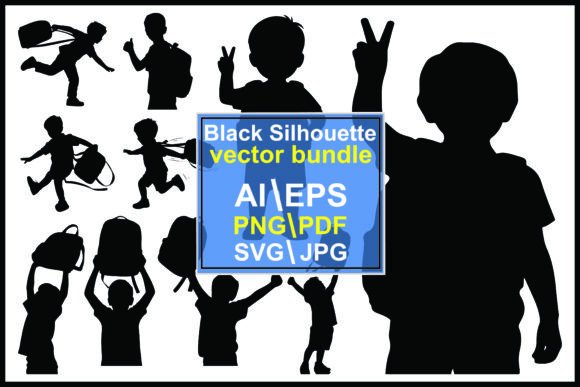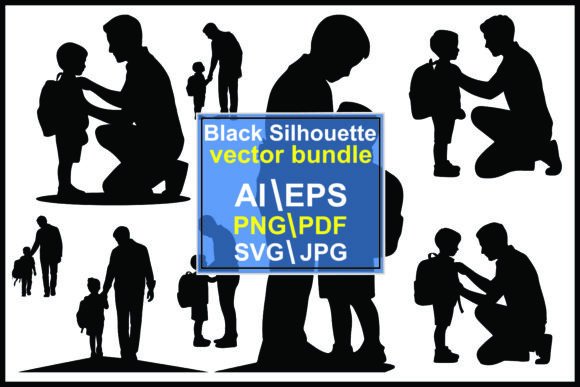
Silhouettes of Adults Children Various: A Visual Language for Connection and Care
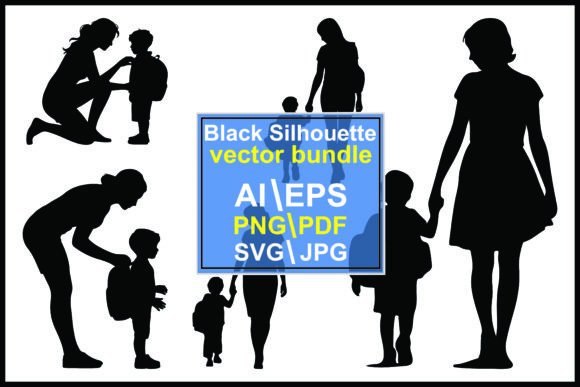
In the realm of graphic design and visual storytelling, few motifs are as universally understood as the Silhouettes of Adults Children Various. These stark black-and-white profiles strip away the distractions of color, facial expression, and specific detail to reveal the pure essence of human interaction. Whether depicting a parent kneeling to tie a shoe, a teacher guiding a student, or a family holding hands, these forms communicate deep emotional truths through simplicity. For designers, educators, marketers, and researchers, understanding the power and versatility of these figures is essential for creating content that resonates across cultures and demographics.
The Power of Minimalism in Human Representation
The effectiveness of silhouettes lies in their ability to generalize while remaining specific to action. When we view a Collection of Silhouettes of Adults and Children in Various Interactions, we do not see individual identities; instead, we see archetypes. This abstraction allows the viewer to project their own experiences onto the image. A silhouette of an adult standing protectively behind a child can represent a mother, a father, a guardian, or even a mentor. The lack of defining features removes barriers, making the imagery inclusive and relatable to a broad audience.
This minimalist approach is particularly powerful when discussing complex themes like parenting, education, and childcare. In a world saturated with hyper-realistic photography and detailed illustrations, the clean lines of a black and white silhouette offer a moment of clarity. They focus the eye on the posture, the proximity, and the physical connection between figures. The act of kneeling to speak at a child's eye level becomes a universal symbol of respect and engagement, regardless of the cultural context.
Anatomy of Interaction: Decoding Body Language
Within a silhouette vector bundle, every shape tells a story of relationship dynamics. The distance between two figures speaks volumes about intimacy and support. When adults and children are depicted holding hands, the visual narrative shifts immediately to one of guidance, safety, and trust. Conversely, figures standing apart might suggest independence or instruction. Designers utilize these subtle cues to convey specific messages without a single word of text.
Consider the specific interactions often found in these collections:
- Hugging and Caring: The embrace is perhaps the most potent gesture in any family life illustration. It conveys unconditional love, comfort, and emotional security.
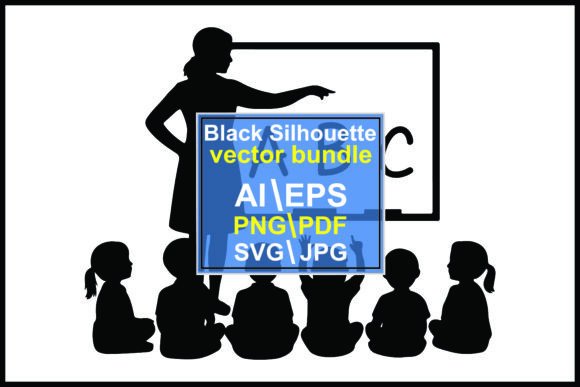
- Teaching and Guidance: Images showing an adult pointing or a child looking up at an adult highlight the transfer of knowledge and the foundational role of education.
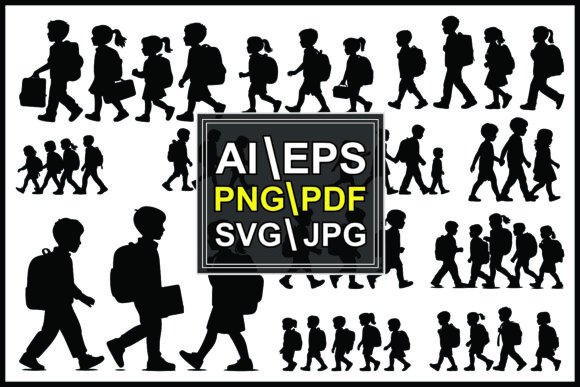
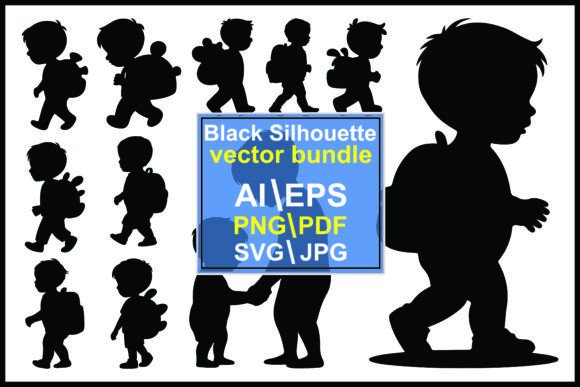
- School Life Elements: The inclusion of accessories like backpacks instantly contextualizes the scene within the academic environment, signaling preparation, growth, and the journey of learning.
Practical Applications Across Industries
The utility of Silhouettes of Adults Children Various extends far beyond simple decoration. These assets serve as critical tools for professionals who need to communicate concepts quickly and effectively. From educational materials to corporate branding, the adaptability of these designs makes them indispensable.
Educational Resources and Curriculum Design
For educators and instructional designers, visual aids are crucial for engaging young learners. Silhouettes provide a neutral canvas that avoids bias regarding race, gender, or socioeconomic status. When creating worksheets, textbooks, or digital learning modules, using a Collection of Silhouettes of Adults and Children in Various Interactions ensures that the focus remains on the lesson rather than the characters' appearances. An illustration of a teacher and student interacting can be used to discuss social skills, classroom rules, or safety protocols without distracting details.
Furthermore, these images are excellent for teaching emotional intelligence. By analyzing the body language in different poses—such as a child reaching out or an adult offering a hand—students can learn to identify feelings and understand the importance of communication and nurturing relationships.
Marketing and Brand Identity
Businesses focused on family services, childcare centers, tutoring programs, and youth sports often rely on these visuals to build trust. A logo featuring an adult and child standing together suggests stability and partnership. Marketing campaigns for parenting products benefit from the emotional resonance of bonding moments captured in silhouette. Because these images are timeless, they do not date quickly, allowing brands to maintain a consistent identity over years.
The versatility of the format also allows for seamless integration into various media. Whether it is a billboard, a website banner, or a social media post, the high-contrast nature of black and white silhouettes ensures visibility and impact. They cut through the noise of colorful advertisements, drawing attention through their bold simplicity.
Research and Documentation
Researchers and sociologists studying family life and relationships often use simplified diagrams to illustrate data or theoretical models. Silhouettes allow for the clear depiction of group dynamics, caregiving structures, and community interactions without the legal or ethical complexities associated with using photographs of real people. This makes them ideal for reports, presentations, and academic papers where anonymity and clarity are paramount.
Technical Versatility and Workflow Integration
One of the primary reasons for the enduring popularity of these designs is their technical flexibility. A comprehensive silhouette vector bundle typically offers multiple file formats to accommodate diverse workflows. Understanding how to leverage these formats is key for professionals seeking efficiency and quality.
The Importance of Multiple Formats
A robust collection usually includes JPG and PNG files for immediate web use and quick previews. These raster formats are perfect for inserting into documents or posting online where scalability is less of a concern. However, the true value lies in the vector formats: AI, EPS, and SVG. These files are resolution-independent, meaning they can be scaled from a small icon to a massive billboard without losing crispness or clarity. This is essential for print production, large-format signage, and high-definition digital displays.
Additionally, the inclusion of PDF files ensures compatibility with a wide range of software and printing standards. Having all these formats compressed into a single zip file streamlines the asset management process. Users simply need to extract the archive using standard tools like WinZip, WinRAR, or the built-in extraction utilities in modern operating systems (often achieved by a direct double-click).
Customization and Adaptation
The editable nature of vector files allows creators to modify the silhouettes to fit specific needs. An educator might add a school bus to a scene of parents dropping off children. A designer might change the pose slightly to better align with a brand's aesthetic. While the core shapes remain the iconic Silhouettes of Adults Children Various, the ability to tweak elements ensures the final output is unique to the project.
When working with these files, it is important to consider the background. While the silhouettes themselves are typically solid black against a white or transparent background, they can be easily recolored to match brand guidelines. A red silhouette might evoke passion or urgency, while blue could suggest calmness and trust. This adaptability makes the black, white, people concept a dynamic starting point rather than a fixed limitation.
Psychological Impact and Emotional Resonance
Beyond the technical and practical applications, there is a profound psychological dimension to using these images. Humans are hardwired to recognize shapes and movements. We instinctively interpret the posture of a figure. When we see an adult kneeling before a child, our brains immediately register care and attentiveness. This immediate cognitive processing makes silhouettes highly effective for conveying emotional states.
In contexts involving support and nurturing, the absence of facial expressions forces the viewer to look at the body language. This can actually enhance the emotional impact. Without a smile or a frown to dictate the mood, the viewer fills in the emotional gap based on the context of the interaction. A hug is always comforting; a hand-holding gesture is always supportive. This universality fosters a sense of shared humanity.
For families navigating challenges, seeing these representations of caring and guidance can be validating. It reinforces the idea that these interactions are normal, necessary, and valuable. In therapeutic settings, such images can serve as prompts for discussion, helping individuals articulate their feelings about their own relationships and family dynamics.
Strategic Considerations for Implementation
While the benefits are clear, implementing Silhouettes of Adults Children Various requires thoughtful consideration. Context is king. A silhouette of a child alone might evoke feelings of vulnerability or independence depending on the surrounding text and imagery. Designers must ensure that the visual narrative aligns with the intended message.
Diversity in representation is another key factor. While silhouettes abstract physical features, the poses and activities should reflect a wide range of family structures and interactions. Including scenes of grandparents, single parents, teachers, and peers ensures that the imagery remains inclusive. The goal is to create a visual library that reflects the complexity and beauty of real-world relationships.
Finally, accessibility should be a priority. High-contrast black and white images are generally accessible to those with certain visual impairments, provided the line weight is sufficient. Ensuring that the silhouettes are clear and distinct helps make content more inclusive for all users.
Conclusion: A Timeless Visual Resource
The Collection of Silhouettes of Adults and Children in Various Interactions represents more than just a set of graphics; it is a fundamental toolkit for communicating the core values of human connection. From the practicalities of school life and education to the deep emotional bonds of family life, these images bridge gaps and foster understanding. Their technical versatility, combined with their psychological potency, makes them an invaluable asset for anyone looking to tell a story of care, growth, and support. As we continue to navigate an increasingly complex world, the simple, powerful language of the silhouette remains a constant reminder of what truly matters: the connections we share with one another.